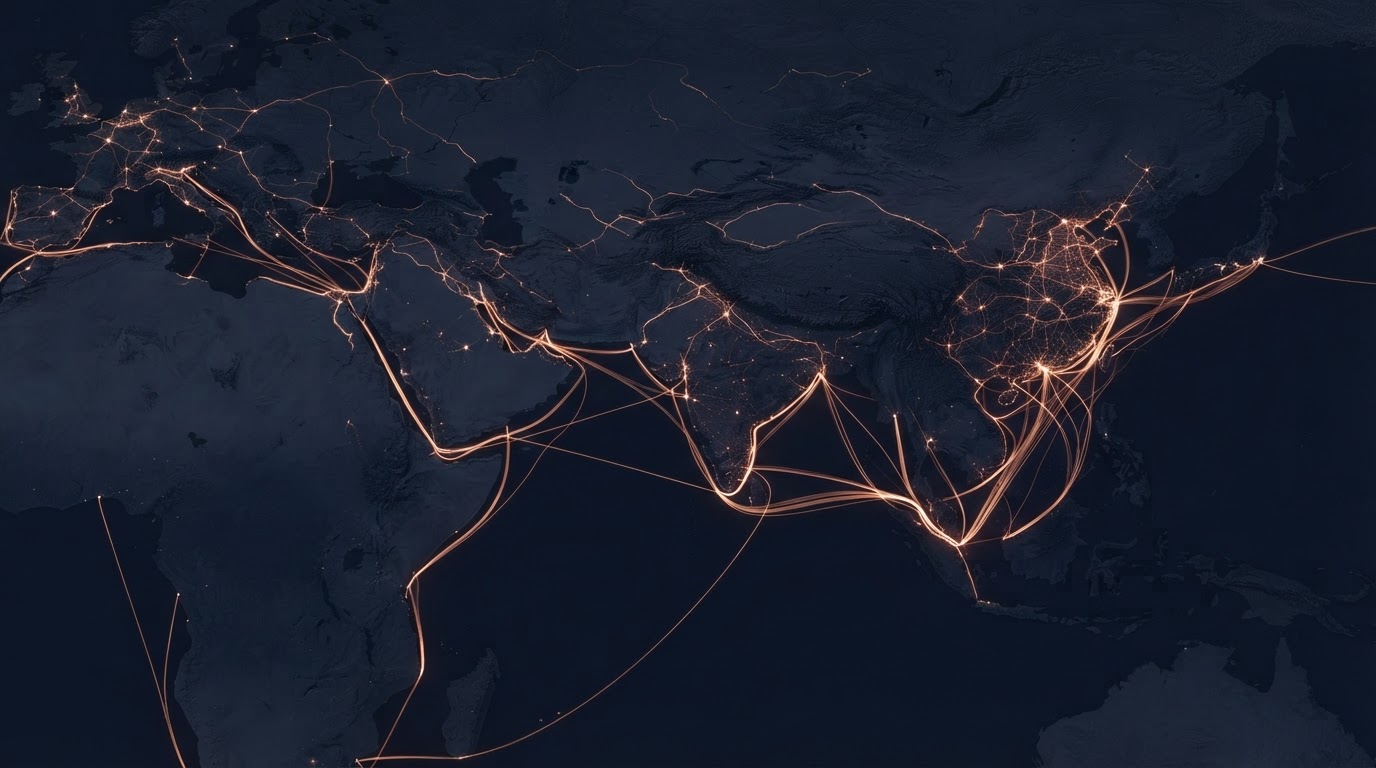
The geometry of global manufacturing is being redrawn. For three decades, the dominant axis ran east-west across the Pacific: raw materials and components westbound, finished goods eastbound. Today, a new north-south corridor is emerging — one that runs from the factory floors of Shenzhen and Dongguan through the Suez Canal to the industrial zones of Egypt, the Gulf, and East Africa.
At the center of this realignment is China's Belt and Road Initiative (BRI), which has quietly shifted from infrastructure loans to industrial capacity cooperation. The numbers tell the story: Chinese outward foreign direct investment in manufacturing to MENA countries reached $18.4 billion in 2024, up 34% from the previous year. Egypt alone saw a 62% increase in Chinese manufacturing investment, concentrated overwhelmingly in the Suez Canal Economic Zone (SCZone).
The TEDA Model: A Blueprint for Replication
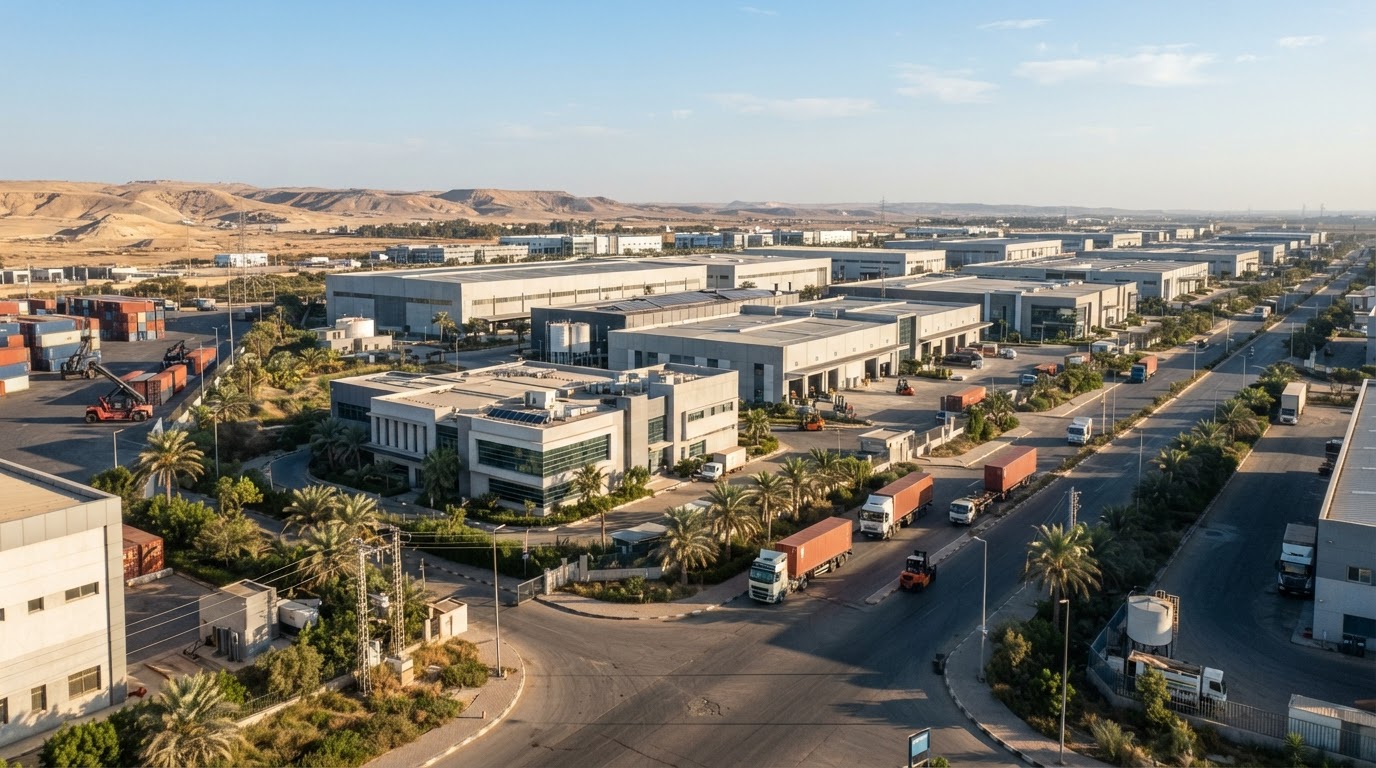
The China-Egypt TEDA Suez Economic and Trade Cooperation Zone — a 7.34 km² industrial park located strategically at the southern entrance of the Suez Canal — has become the template. Since its expansion phase began in 2016, TEDA has attracted over 140 companies, 80% of them Chinese manufacturers. These aren't marginal operations: they include full production lines for fiberglass (Jushi Group, the world's largest), industrial chemicals, textiles, and increasingly, electronics assembly and new-energy components.
What makes the TEDA model compelling is its comprehensiveness. It's not just factory space. It's a full ecosystem: worker housing, logistics parks, customs bonded zones, and crucially, a one-stop government service center that cuts business registration from weeks to days. For Chinese manufacturers accustomed to the efficiency of the Pearl River Delta, this matters enormously.
Three Structural Drivers
The acceleration isn't random. Three structural forces are converging:
1. Tariff arbitrage. A PCB assembly exported from China to the European Union faces tariffs averaging 3–5%. The same product manufactured in Egypt's SCZone and exported under the EU-Egypt Association Agreement faces zero. For high-volume electronics, this differential alone can justify the capital expenditure of establishing regional production.
2. Logistics compression. Shipping a container from Shenzhen to Rotterdam takes 28–32 days via the Suez route. From Cairo's SCZone to Rotterdam: 10–12 days. For time-sensitive industrial goods, halving the delivery window carries real inventory-cost implications.
3. Gulf state industrial policy. Saudi Arabia's Vision 2030 has allocated over $100 billion to develop domestic manufacturing. The UAE's Operation 300bn aims to more than double industrial GDP by 2031. Qatar's National Vision 2030 explicitly calls for manufacturing diversification. These aren't aspirational documents — they're backed by sovereign procurement commitments, subsidized industrial land, and energy rates far below global averages.
What's Actually Being Manufactured
The investment isn't theoretical. On the ground, the production mix is evolving rapidly:
- Electronics and PCB assembly — Several Tier-2 Chinese EMS providers have established SMT lines in Egypt to serve European automotive and industrial clients. The labor cost advantage versus Eastern Europe is significant, and the quality gap has narrowed to the point of equivalence for most commercial-grade applications.
- UAV and drone assembly — Egypt's military and agricultural sectors are significant drone buyers. Chinese manufacturers establishing local assembly and training centers gain preferential procurement access.
- EV component manufacturing — Battery modules, wiring harnesses, and power electronics for electric vehicles are increasingly produced in North African free zones. Morocco has captured much of the wiring harness market; Egypt and Tunisia are competing for the next tier of EV subsystems.
- Construction materials and industrial chemicals — The Gulf's construction boom, fueled by sovereign wealth and post-oil diversification, creates sustained demand that local Chinese-operated factories are positioned to meet.
The Platform Opportunity
For companies like MRYK Group — Hong Kong-rooted platforms that bridge Chinese manufacturing capacity with MENA market access — this structural shift presents a multi-dimensional opportunity. The value isn't just in connecting factory to buyer. It's in providing the integrated layer: identifying suitable Chinese manufacturing partners, structuring the joint venture or contract manufacturing agreement, navigating regulatory approval in the host country, qualifying the facility for export certificates, and managing the cross-border supply chain.
This "industrial platform" model — where the intermediary provides not just matchmaking but full operational capability — is relatively new in the China-MENA corridor. It has been proven in Southeast Asia (Vietnam, Indonesia) over the past five years. The MENA application is the logical next chapter.
The companies that will win in this corridor aren't the pure traders or the pure manufacturers. They're the platforms that can deploy capital, technology, and operational expertise across borders — simultaneously understanding a Shenzhen factory owner's quality concerns and a Cairo free zone administrator's regulatory framework.
Risks and Realities
The corridor is real, but it's not frictionless. Currency volatility in Egypt has been a persistent challenge. The backlog of repatriation requests that plagued 2022–2023 has largely cleared, but corporates now build hedging into their MENA manufacturing models. Bureaucratic complexity, while improving, remains a factor — the difference between a six-month and an eighteen-month factory setup timeline often comes down to having the right local partner.
Infrastructure quality is uneven. Port capacity at Ain Sokhna (SCZone's maritime gateway) has expanded significantly with the new Hutchison Ports terminal, but last-mile logistics in some North African markets remain challenging. Power reliability, once a constraint, has improved markedly as Egypt has invested heavily in gas-fired generation and renewable capacity.
The net assessment, however, is clear: the China-MENA manufacturing corridor has crossed the threshold from theoretical to operational. The companies establishing production capacity today are building the supply chains that will serve a combined market of over 600 million consumers across the Middle East and Africa — and, through free trade agreements, the European Union as well. For industrial platforms positioned at this intersection, the decade ahead looks fundamentally different from the decade behind.